
The Stakeholder Mistakes That Quietly Damage Testing Leaders
The reputations that matter most rarely change because of one big moment.
I've found myself thinking quite a bit recently about how testing leaders build their reputation.
When people look back on a career, it's usually the big moments they remember. The difficult release. The programme that drifted off course. The executive meeting that didn't go as well as you'd hoped. Those experiences stay with us because they're visible. Everyone knows they've happened, including us, and most of us carry the lessons from them for years afterwards.
The more I reflect on my own career, though, the less convinced I am that those are the moments that shape us most.
I'm increasingly interested in the quieter ones. The conversation that probably should have happened a little earlier. The stakeholder relationship that never quite developed because there always seemed to be something more urgent demanding attention. The governance meeting where the testing was explained thoroughly, yet people somehow left with different views about what the programme should do next.
Individually, none of those moments feels particularly significant. It's only when you look back across a programme, or sometimes across several years, that you realise they were quietly changing something much more valuable than the testing itself.
They were shaping how other people experienced your judgement.
I don't think I appreciated that early in my career. Like most testing leaders, I spent a great deal of time trying to improve the quality of the testing itself. Better planning, better coverage, better reporting and better governance were all worthwhile pursuits, and I'd encourage any testing leader to invest in them.
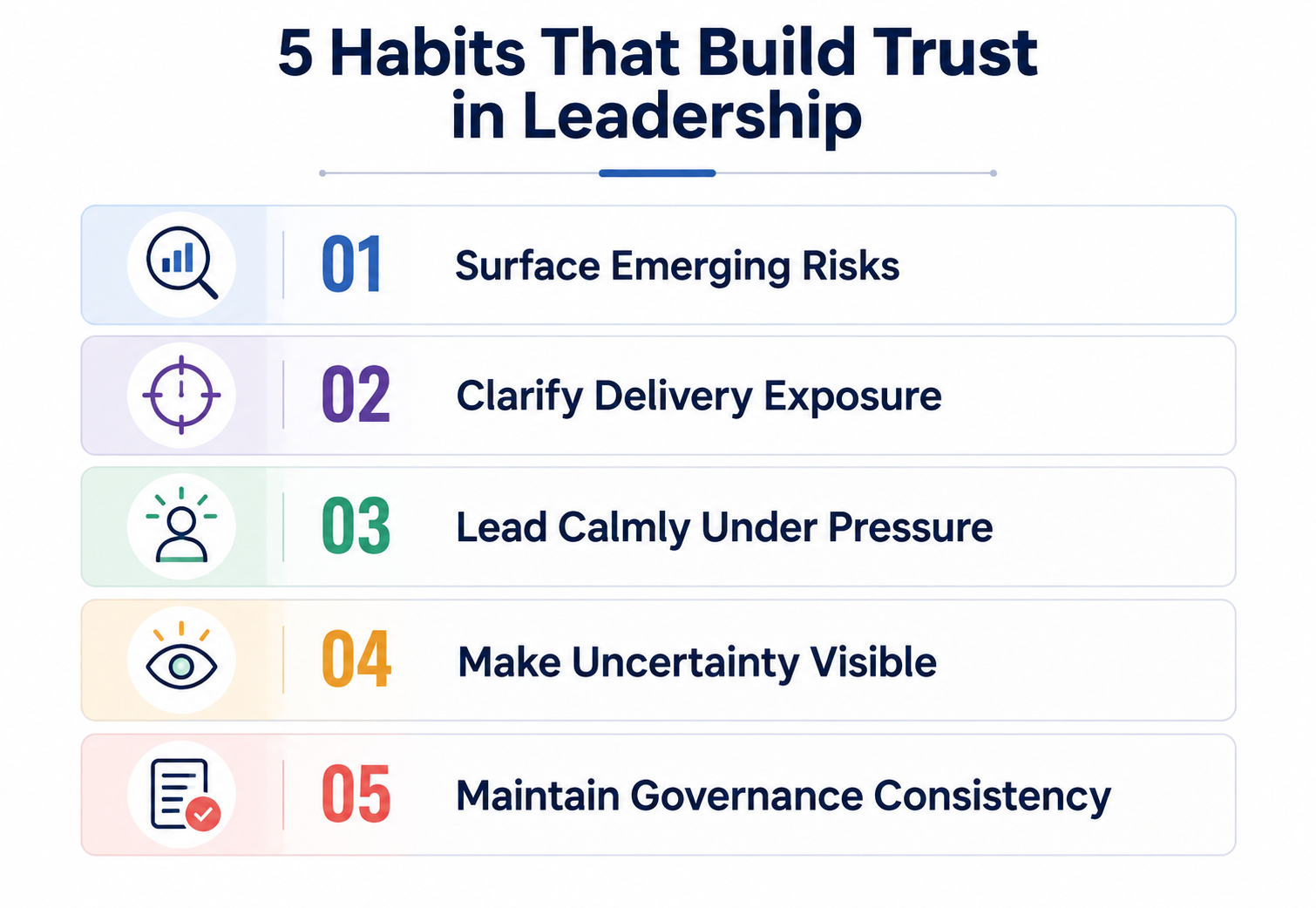
At the time, I probably assumed stronger testing would naturally lead to stronger stakeholder confidence.
Sometimes it did. Sometimes it didn't.
It took me longer than I expected to understand why.
Over the years, I watched very capable testing leaders gradually lose influence without anything dramatic happening to explain it. Their testing was still strong and their teams were performing well. If I'm honest, I can recognise periods in my own career where I probably came closer to some of those patterns than I realised at the time.
None of them came from poor intent. Most came from making what felt like perfectly reasonable decisions while trying to deliver a difficult programme.
That's probably what made them so difficult to recognise.
One of the first patterns I began to notice was where I naturally invested my attention. Like most people in delivery, I spent the majority of my time with the stakeholders I saw every week: delivery leads, business representatives, project managers and the people involved in the programme day after day.
There was nothing inherently wrong with that. Those were the relationships the work naturally placed in front of me, and many of them were extremely important.
What I hadn't yet learned was to separate visibility from influence.
Some of the stakeholders who ultimately had the greatest influence over the success of a programme weren't necessarily the people I spent the most time with. Sometimes it was a risk function that only became heavily involved as a significant decision approached. Sometimes it was an operational team that would inherit the consequences of a release long after the project itself had finished. Occasionally it was an executive sponsor who attended very few meetings but ultimately carried the accountability for the decision everyone else had been working towards.
None of those relationships felt particularly urgent in the early stages of a programme. Everyone was busy, priorities were changing and there was always something more immediate demanding attention. Then, almost without warning, one of those stakeholders became the most important person in the room.
Looking back, the issue was rarely that the conversation didn't happen. It was that it happened much later than it should have.
That was probably when my view of stakeholder management began to change. I started thinking less about the relationships that were most visible and more about the relationships the programme would eventually depend upon. They weren't always the same people.
Around the same time, something similar happened with the way I thought about escalation.
Earlier in my career, I tended to see escalation largely as a governance process. An issue reached a particular threshold, it was raised through the appropriate forum and everyone understood why the conversation was taking place. At least, that's how I understood it then.
It took me a while to appreciate how much judgement sits inside that decision.
Two testing leaders can escalate exactly the same issue and leave stakeholders feeling completely differently about the programme. One conversation leaves people thinking the situation is understood and being managed. The other leaves them wondering why they weren't told earlier, or whether the issue has become more serious than anyone realised. The underlying problem may be identical. What changes is how the escalation is experienced.
Nobody ever explained that to me. I simply started noticing it after sitting through enough Steering Committees.
People rarely talked afterwards about whether an escalation had followed the correct process. What seemed to matter was whether it felt well judged. Did they understand why they were hearing about it now? Had they been given enough time to influence the outcome? Did they leave the room clearer about the problem and what happened next?
The more I reflected on those conversations, the more I realised they were shaping something much bigger than the immediate issue. They were quietly teaching stakeholders what to expect from my judgement.
I noticed something similar whenever programmes came under genuine pressure.
Many capable leaders, myself included at times, become noticeably quieter when the picture is unclear. I understand the instinct. When you don't yet have all the facts, it feels responsible to wait for another day, another meeting or another piece of information before saying too much. Nobody wants to create unnecessary concern, and nobody wants to speculate.
The difficulty is that stakeholders don't always experience that silence in the way we intend.
When I think back to programmes where confidence remained relatively steady despite significant challenges, it wasn't because every answer was available immediately. Often it wasn't. What mattered was that people felt somebody still had hold of the situation. They understood what was known, what wasn't yet known and what would happen next.
The uncertainty hadn't disappeared, but it hadn't become confusion either.
It took me much longer than I'd like to admit to appreciate the difference between those two things. Silence can feel responsible from the inside because you're waiting for better information. From the other side of the table, the same silence can feel as though nobody quite knows what's happening.
That doesn't mean filling every gap with commentary or offering certainty where none exists. If anything, experience taught me to become more comfortable saying that I didn't yet know. But there is a considerable difference between acknowledging uncertainty and leaving people alone with it.
There was another change in my thinking that I don't think I recognised until much later.
It wasn't really about who I was speaking to, when I was escalating or how much I was communicating. It was about what I believed my responsibility actually was.
Earlier in my career, I suspect I judged a stakeholder conversation largely by whether I'd communicated everything I needed to communicate. If the testing had been explained clearly, the risks had been covered and the reporting was accurate, I generally walked away believing I'd done my job.
Over time, I began to realise that wasn't quite what the people around me were judging.
They were trying to answer a much simpler question.
Can I rely on this person's judgement?
The more I think about it now, the more I believe that question sits quietly underneath almost every important stakeholder conversation. Not because people are consciously assessing us as individuals, but because they're trying to decide whether the judgement sitting in front of them is strong enough to support the decision they're about to make.
That gradually changed the way I prepared for governance meetings.
I spent less time asking myself whether I'd included every piece of information and more time asking whether I'd genuinely helped people understand what the testing meant. I still wanted the reporting to be thorough and the evidence to be robust. None of that changed. What changed was the purpose behind it.
The reporting wasn't there simply to explain the testing. It was there to help people make a decision they could stand behind.
I don't think I recognised that shift while it was happening. Like many of the more important lessons in my career, I only really understood it after seeing the same patterns repeat themselves across different programmes, organisations and leadership teams.
Perhaps that's why this subject has stayed with me for so long.
Stakeholder management can sometimes sound like something that sits alongside the real work of testing leadership: useful certainly, but somehow separate from the technical responsibility. The longer I've worked in the profession, the less I see it that way.
The way we manage those relationships determines whether risks are heard early enough to matter. It affects whether an escalation creates clarity or anxiety, whether uncertainty is understood or allowed to become confusion, and ultimately whether people trust the judgement accompanying the evidence we're presenting.
The testing leaders I've admired most weren't people who somehow avoided all of these mistakes. I don't think that's realistic. They were people who became increasingly aware of the effect they were having on the people around them.
They noticed when confidence was beginning to drift. They recognised when an important relationship hadn't developed as it should have. They could sense when a room needed more information and when it simply needed a clearer position. Most importantly, they adjusted before those small patterns became part of how the organisation experienced them.
I don't think they did that because they had a better framework.
I think they became better observers.
Perhaps that's one of the things experience really gives us. Not perfect judgement, because I'm not convinced anyone ever reaches that point, but better observation. The ability to notice the small conversations, quiet signals and subtle changes that are easy to miss while we're busy delivering the programme.
Looking back now, I sometimes wonder how many of those conversations I've forgotten over the years. The interesting thing is that the people sitting on the other side of the table may not have forgotten them at all.
They were gradually discovering whether they could rely on my judgement, often without either of us recognising that was what was happening.
I suspect that's how most reputations are built.
Not in the meetings everybody remembers, but in the conversations that hardly anybody thinks about again.